
No Verified Early County 24-Hour Release Feed
Research found no official Early County Sheriff page that publishes a rolling list of people released today. The sheriff public-resource page mentions inmate information, but the detention page is descriptive and the open-records page is the practical route for a lasting copy. No fields, refresh schedule, or retention period can be stated for a feed that was not verified.
A person may disappear from a local view because the person bonded out, completed a sentence, received a court-ordered release, moved to GDC, or was picked up by another agency. Each result points to a different record custodian. For a named-person search and the broader release-record path, use the Early County released-inmate search.
How to Check Early County Same-Day Releases
A same-day check works best when the caller has enough identifiers to separate people with similar names. Use the full legal name, date of birth if known, arrest date, and a charge or case number when available.
- Call the jail and ask whether the person is in Early County custody now.
- If the person is no longer held, ask for the release date and time and the release reason.
- Ask whether “release” meant bond, court order, sentence served, dismissal, transfer, or pickup on a hold.
- Call the sheriff/open-records contact at 229-723-3577 if staff cannot give record details by phone.
- Check Georgia VINE for a custody-status change and register for alerts when a record is available.
- Use the court docket for a bond order, first appearance, disposition, or sentence order.
The jail inquiry is the fastest status check, while a written request is better when an exact timestamp or documented reason matters. Georgia’s Open Records Act generally requires an agency response within three business days, though that response may give an estimate rather than the finished record.
Fields in an Early County Release Record
Because there is no verified online list, these are fields to request, not claims about a public screen.
| Field | What it can establish |
|---|---|
| Name and identifiers | Connects the record to the correct booking. |
| Booking or case number | Links jail, warrant, and court records. |
| Release date and time | Documents when local custody ended. |
| Release reason | Distinguishes bond, order, time served, dismissal, or transfer. |
| Bond and court | Identifies the bond mechanism and ordering court when applicable. |
| Receiving agency | Shows whether the person entered another custody system. |
Ask only for fields needed to verify custody, a court matter, notification, or correction of a record. A booking photo is a separate request and is subject to Georgia disclosure limits.
Released or Transferred from Early County?
“No longer in this jail” does not always mean free in the community. A state-sentenced person may be transferred to the Georgia Department of Corrections. GDC’s offender query can show a current facility, released or discharged status, and release-related dates. A federal pickup should be followed through the federal custodian, while an immigration transfer belongs in the ICE custody channel.
A county release on bond can also leave the criminal case open. The Early County Clerk and Pataula Judicial Circuit records can show the court order or later disposition. Georgia VINE is useful as a notice layer, but its status should be confirmed with the agency that created the record.
Weekend Early County Release Review
A three-day check is not merely three same-day calls. It gives the researcher time to compare the jail answer with the court record and any VINE event. Start with each date and ask for release time, reason, and receiving agency. Then organize results by booking or case number so two custody events for the same person are not confused.
Weekend and holiday timing can separate the court decision from jail processing. A bond order may precede the custody exit, while a clerk entry may appear later. VINE can also post a change after the local event. Preserve the timestamp from each source and ask the sheriff for the official release record when the sources conflict.
Build an Early County Three-Day Record
For each day, note the source, time checked, custody wording, and any release reason. A “transfer” entry must be followed to the receiving system. A bond release should be paired with the court’s order or docket entry. A sentence-served release can be checked against the sentence record, while a GDC pickup belongs in the state offender query.
This method catches events that a snapshot misses and avoids promising that the sheriff maintains an archive it does not publish. It is especially useful when a family member saw a custody notice over a weekend but needs the documented sequence later.
When the Early County Record Lags
Booking, bond, release, and transfer events are entered by different offices. A court may sign an order before jail processing is finished, and VINE may receive a custody update after the local change. Call again if public safety or notification needs require current confirmation.
For a wider document window, the Early County releases from the last 72 hours workflow adds court and written-record checks. Neither page claims to display an official live feed.
Early County Records to Gather Across Three Days
A three-day review can reconcile records that appear on different schedules. Request the booking and release entries from the sheriff, then compare any bond or disposition order from the clerk. Save the VINE notice with its delivery time, but distinguish that time from the underlying custody event. If the jail says transfer, obtain the receiving agency name rather than closing the timeline.
Useful identifiers include full name, date of birth, arrest date, booking number, warrant number, charge, and court case number. Ask for the release time and reason in writing. If releasable, bond type, ordering court, and transfer destination help explain the event. A records response can also clarify whether two entries reflect separate bookings rather than a correction to one record.
Three-Day Checks Beyond Early County Jail
A wider window should include every custodian that the facts support. Search GDC when the person may have entered state prison. Use the Parole Board parolee search and DCS when a state prisoner may have left custody for supervision. Use federal or ICE tools only when a documented transfer or case gives a basis for those systems.
Do not use the current jail roster as an archive. A released person may drop off, while a transferred person can vanish from local custody and appear later in another database. The sheriff release record remains the best local proof of when Early County custody ended. The other system explains what followed.
Check Supervision After an Early County Release
The official Georgia parolee search is a matched follow-up when the three-day review indicates a state prisoner may have entered parole supervision.
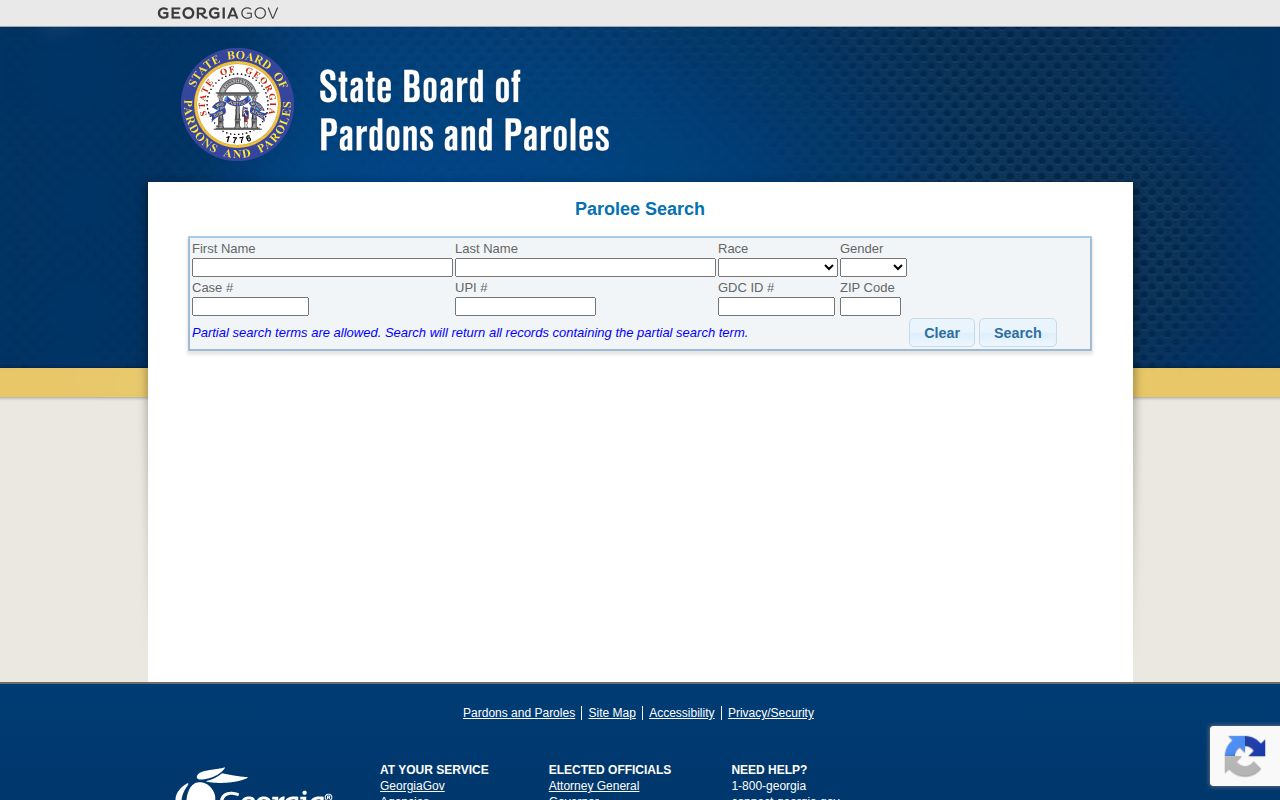
The screen checks the post-prison supervision path. It does not list all Early County jail releases and should only be used when the custody history points to state parole.