
Early County Booking Photos After Release
A booking photo belongs to the arrest and booking record. It can remain after the person leaves jail, while the live custody entry may disappear. The image alone does not show whether the person bonded out, completed a sentence, transferred, or obtained a dismissal.
Georgia law places special limits on a law-enforcement agency’s release of booking photographs when a photo may be placed on a publication or website that charges for removal. A request can require a statutory certification, and an agency may deny disclosure when O.C.G.A. 35-1-19 applies.
Where Early County Released Mugshots Appear
The available channel depends on the custody system and the reason the image was published.
| Channel | Photo? | Access |
|---|---|---|
| Sheriff records | Possible, subject to law | Submit a purpose-neutral request. |
| GDC offender query | Automatic if available | Search a state offender by ID or name. |
| GBI sex offender registry | For registrants only | Search the official registry. |
| Sheriff social media | Selected cases | Use as a lead, not a release record. |
| Local news | Selected stories | Confirm with official records. |
| Commercial copies | May exist | May be stale or wrong; no endorsement. |
No Early County Mugshot Feed or App
The sheriff detention page contains jail and facility information, not a verified public booking-photo roster. The public-resource page refers broadly to inmate information, but research did not capture a working released-inmate photo feed. No Early County sheriff mobile app offering releases or mugshots was verified.
The sheriff’s Facebook page can publish a wanted or case-specific photo. Social content is selective and may remain after custody changes. Use the Early County same-day release workflow to confirm the actual custody event.
Request an Early County Booking Photo
A focused request gives the sheriff enough information to locate the booking without implying a prohibited publication use.
- Identify the person by full name, aliases, and birth date if known.
- Add the arrest date, booking number, case number, and arresting agency when available.
- Ask for the booking photograph and the related release record.
- Describe the request in purpose-neutral terms.
- Complete any certification required under Georgia law.
- Send it through the sheriff open-records route or call 229-723-3577 for instructions.
The Georgia Open Records Act generally calls for a response within three business days. The response may provide records, cite an exemption, or give an estimate of time and lawful cost.
Early County News and Social Photos
Early County News and WALB’s Early County coverage may show arrest images or case developments. GBI press releases and the sheriff Facebook page may also publish a selected photo. These are editorial or public-safety posts, not a complete archive of releases.
A copied image may be disconnected from later court action. Confirm identity, custody, and disposition through the sheriff, clerk, GDC, VINE, or DCS before relying on it for personal knowledge, notification, a legal matter, or correction of a record.
Georgia Booking-Photo Removal Rules
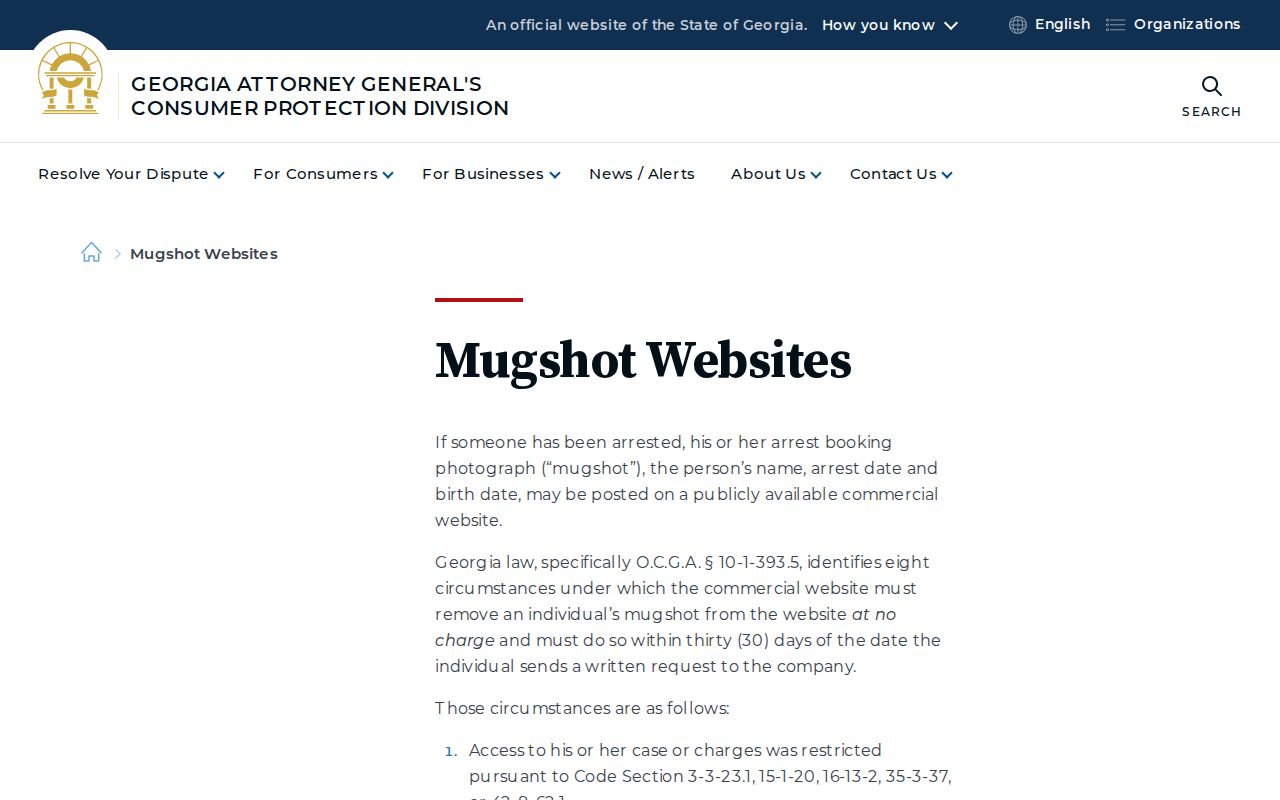
Georgia’s Attorney General consumer guidance says commercial mugshot websites must remove qualifying images without charge within 30 days after a proper written request under O.C.G.A. 10-1-393.5. That rule addresses commercial publication; it does not rewrite the sheriff or court record.
The successful official consumer-guidance image documents the removal-law source.
Follow the official written-request procedure rather than paying an unverified removal service.
Record Restriction in Early County Cases
Georgia uses record restriction rather than a simple promise that every record is deleted. GBI explains that O.C.G.A. 35-3-37 governs restriction of eligible criminal-history records for non-criminal-justice purposes when approved by the prosecutor. For arrests after July 1, 2013, the request generally goes through the prosecutor; older arrests use the arresting agency route.
Georgia.gov says GCIC commonly processes a complete application within two to three weeks. Restriction of criminal history and removal of a separately published image are different steps. Check the official source holding each copy and keep proof of the disposition or approved restriction.
GDC and Registry Photos Are Different
GDC states that an offender photograph, if available, appears automatically in its Find an Offender results. That image relates to state corrections and may not match the county jail booking photograph. Use GDC only when the person entered the state prison system.
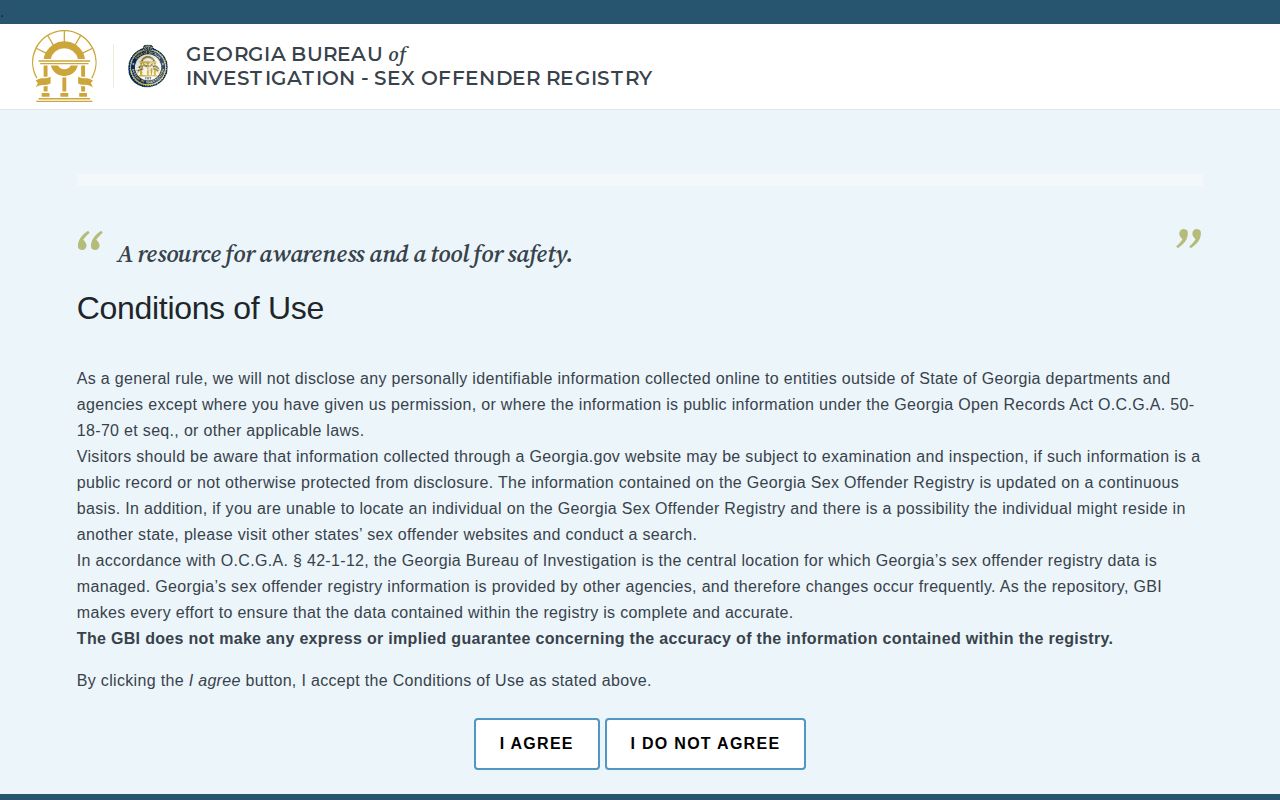
The official Georgia sex offender registry may display a current photograph for a person required to register. It is not a general released-inmate or mugshot search and excludes most people released from jail. The successful registry image from the manifest shows the official source.
Open the GBI registry only when registration status is relevant.
Verify a release separately because registry status and jail custody answer different questions.
Verify the Early County Case Behind a Photo
A booking image confirms that a photograph was associated with an arrest record at some point. It does not establish guilt, final charge, outcome, or present custody. Match it to a booking number or arrest date, then obtain the release and court records.
The sheriff documents local booking and release. The clerk can show bond, dismissal, sentence, or disposition. GDC applies only if the person entered state corrections. VINE is a notice layer, not the authoritative photo or disposition.
Correcting an Early County Photo Record
If an image is attached to the wrong person or inaccurate data, start with the office that published that copy. State the exact error, give the source URL or record number, and attach the official record supporting correction. Keep the request and response.
A copied image may persist after an official source changes. Commercial removal and criminal-history restriction follow different procedures. One request does not update every copy. Work source by source and use the official disposition as evidence.
Purpose-Neutral Early County Photo Requests
O.C.G.A. 35-1-19 makes intended publication and paid removal relevant to disclosure. A request for personal knowledge, custody verification, notification, legal process, or record correction should say only what is accurate and needed. Never make a false certification.
Ask whether a certification is required and which record part can be released. If the photo is withheld, booking and release fields may still answer the custody question. A timestamp, reason, court, and receiving agency are often more useful than the image.
Early County Sheriff Photo Versus GDC Photo
A county booking photo is made during the local arrest process. A GDC offender photograph belongs to state corrections. The images may have different dates, clothing, identifiers, and record numbers. If a person moved from Early County Jail to state prison, both records can exist, but they document different custody stages.
Ask the sheriff for the county booking photo when the local arrest is the question. Use GDC when the state sentence is the question. Pair either image with the correct release or discharge record so the photo is not mistaken for current custody.
Why an Early County Photo May Stay Online
A news report or social post can remain accessible after the jail record changes. Search indexing and copied pages may preserve an old image even after the source corrects it. That persistence does not override a later release, dismissal, disposition, or approved restriction.
Save the official record showing the updated status. Ask the source holding the copy to correct or remove it under the rules that apply to that source. Georgia’s commercial mugshot rule, GBI record restriction, and a publisher’s editorial policy are separate paths.
Keep Photo Dates and Sources Together
Save the source agency, image date if given, booking number, and date accessed with any lawful copy. A photograph without its source can be confused with a later arrest or a GDC image. If a news story reuses an older photo, the caption may not describe the current custody event.
Compare the photo record with the Early County release timestamp and the court disposition. If the identifiers do not match, do not assume the image belongs to the person being researched. Report a mismatch to the publisher or agency with the official record that demonstrates the error.
This source-first method keeps the search focused on custody verification and record correction. It also avoids treating an image as a substitute for the written release reason.